Certification Board

You trust your life to your vaulting poles. Just like you trust the brakes in your car to stop safely, or the harness on a roller coaster to keep you in your seat — you trust your poles every time you leave the ground. Every plant is a bet on the structural integrity of a fiberglass or carbon fiber tube to launch you skyward and deliver you safely to the pit. Poles are expensive, they’re essential, and they deserve a lot more respect than most athletes give them. Here’s how to take care of yours — at practice and at meets.
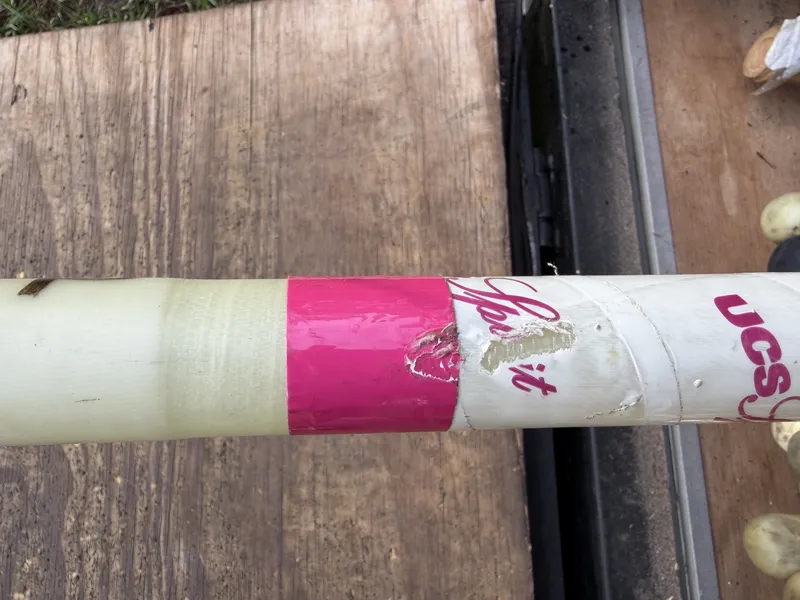
Before and after every practice and every meet, give your poles a visual and tactile inspection. You’re looking for deep cuts, gouges, spike marks, or any sign of delamination in the fiberglass. Surface scratches are cosmetic. Deep ones can be catastrophic.
Here’s a simple field test: Peel the label back around the damaged area so you can get an unobstructed look at the full extent of the scratch. Run your fingernail across the scratch and apply pressure up and down. If your fingernail catches and you can’t pull it out of the groove, that pole needs to come out of rotation. It’s always a judgment call, but when it comes to your safety, err on the side of caution.
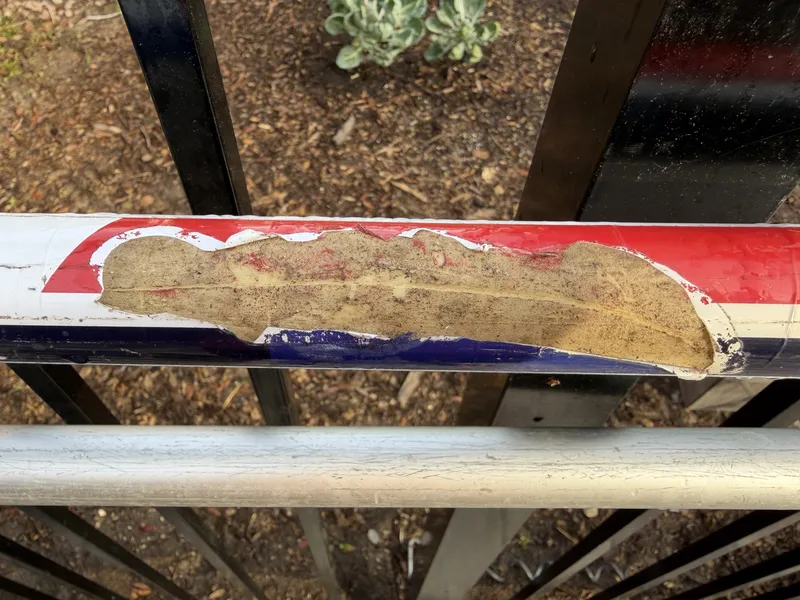
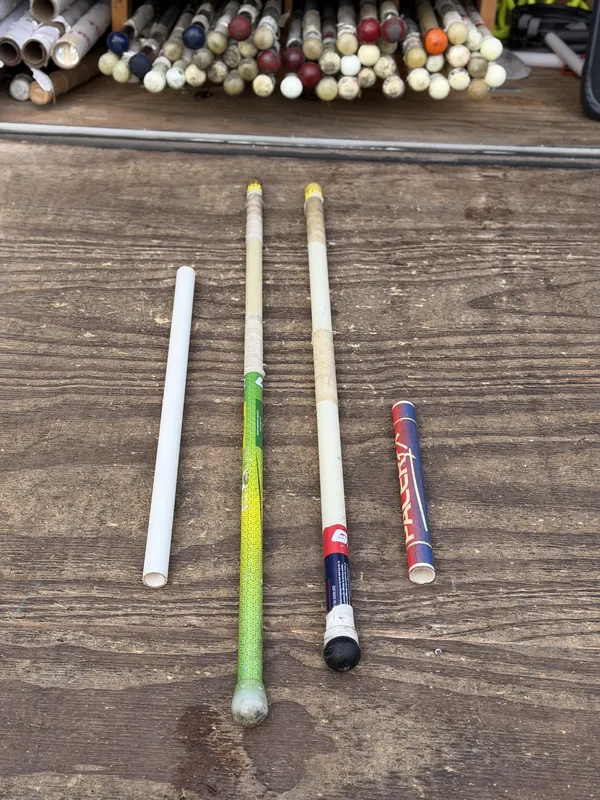
A compromised pole doesn’t have to go in the dumpster. I like to take a chop saw and cut decommissioned poles into 4–5 foot lengths to use as stubbies for drill work. They get a second life and stay out of the competition bag where they could hurt someone.
Manufacturers confirm that poles have no set expiration date — a well-maintained pole can last decades and thousands of vaults. But a single deep gouge can end a pole’s career in an instant.
If you do find damage, and it's a relatively new pole, call the manufacturer. Some warranty their poles for a year and they may send you a replacement.
This is the single most important habit you can build. Never lay your poles flat on the ground. Not for a second. Not “just real quick.” Never.
This is where spike marks can be completely avoided. Track meets and practices are full of athletes walking around in spikes, and they’re not looking at the ground for your pole lying in their path. One careless step and you’ve got a gouge that could compromise the pole’s integrity — or worse, end up hurting someone who jumps on it later without noticing.
Always prop your poles up on something: a bench, a fence, a hurdle, the back of the bleachers. Or better yet, keep them in your pole bag between jumps, stored out of the way of main foot traffic.
A word of caution: We advise against leaning poles on tents. Tents shift in the wind, people bump into them constantly, and there’s heavy foot traffic around them. Having said that, if your only other alternative it to lay it on the ground, the tent is a better option.
Buy a pole tree — or make one. They’re worth every penny. At my club, I built one for a total cost of about $10: a 4x4 post sunk into a hole in the ground (no concrete needed) with PVC pipe racks inserted into drilled holes. Simple, cheap, and it keeps every pole safe and upright.
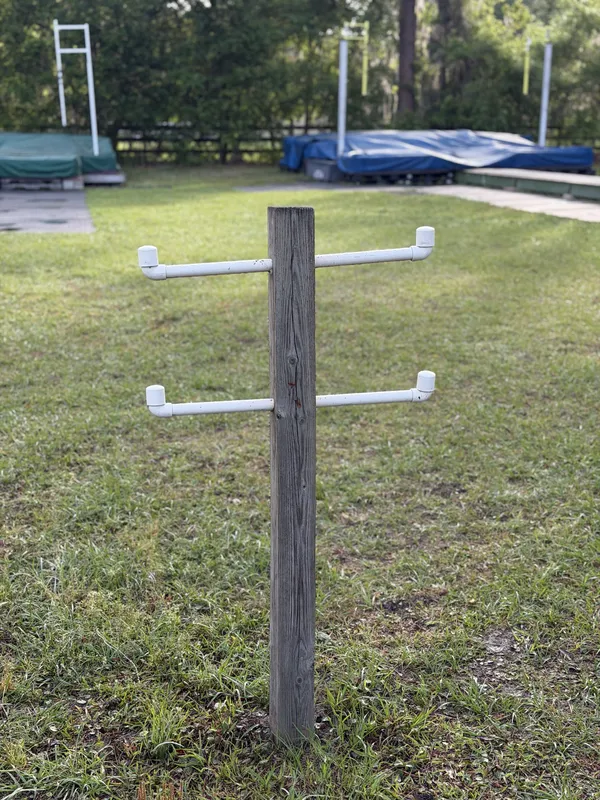
For home meets, a pole tree is a must. For away meets, your pole bag is your best friend.
The rubber plug at the bottom of your pole takes a beating every single vault. It’s the point of contact with the planting box, and it wears down faster than most people realize. Check your plugs every few weeks at minimum.
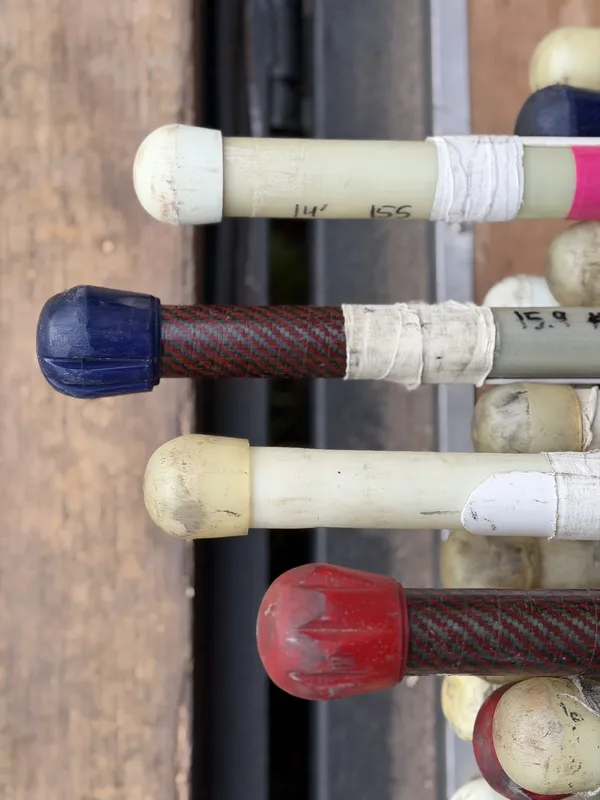
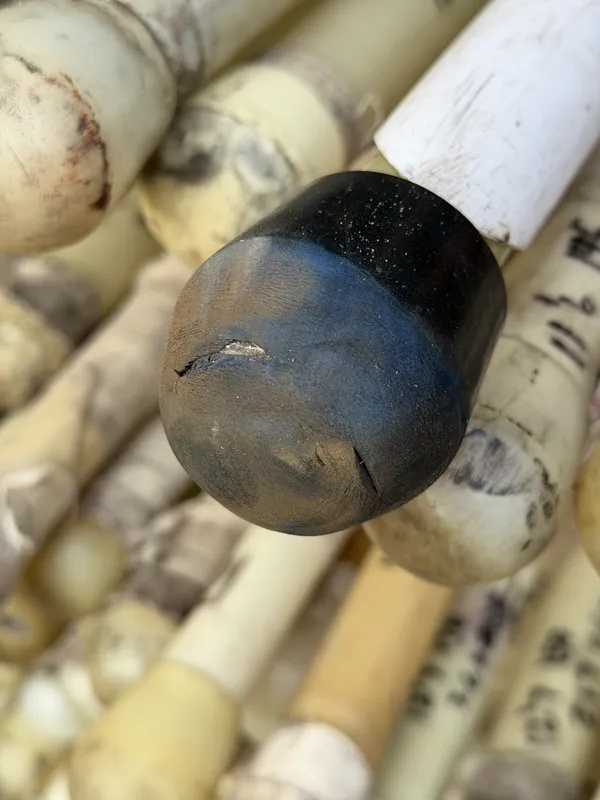
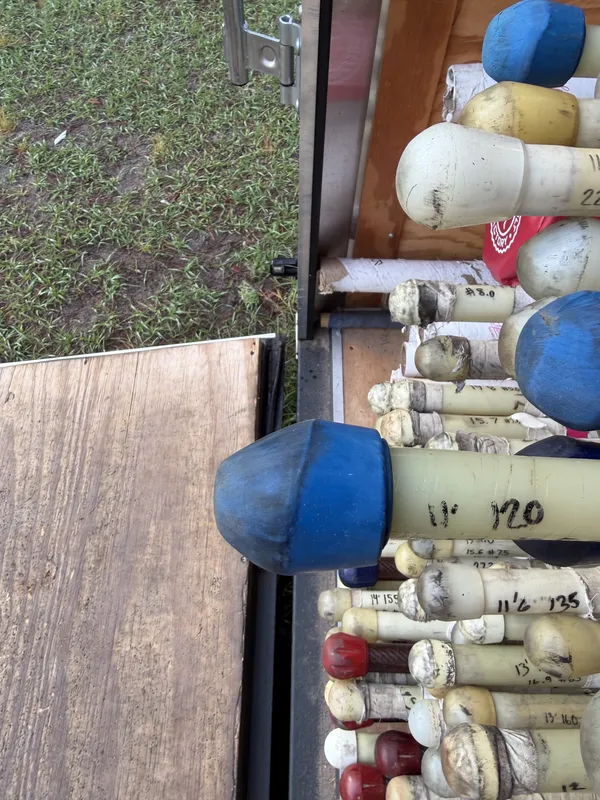
If you let a plug wear through, the pole itself starts making direct contact with the metal box. That’s bad news — it can split or crack the bottom of the pole, and a cracked pole bottom is a ticking time bomb. Replacement plugs cost between $20-50 but if you buy in bulk you can get the price down. A new pole costs $500–$1000+. Do the math.
Some vaulters also tape tongue depressors or popsicle sticks around the bottom few inches of the pole where it contacts the box edge during bending. The sticks take the wear instead of the fiberglass, and they’re cheap to replace. Whatever you decide to use, the area to protect is 8-10" from the bottom of the pole, hard-side slightly to the left.
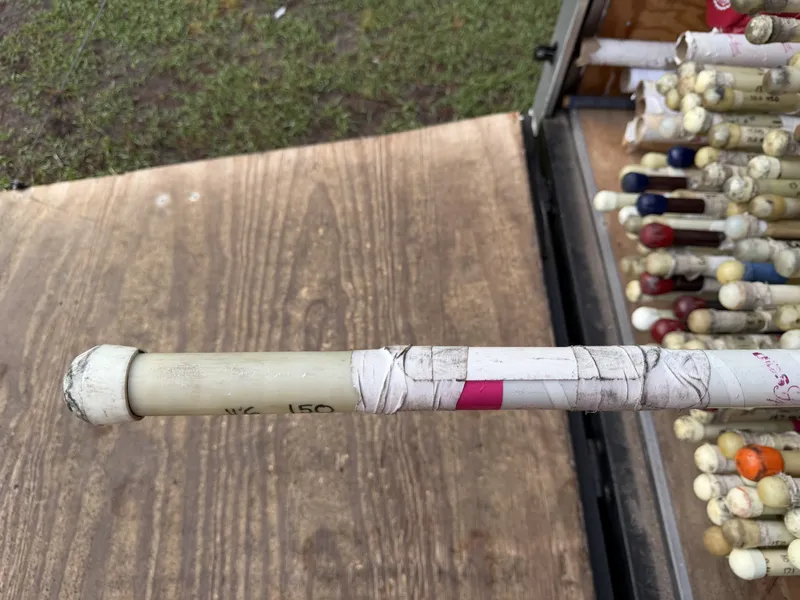
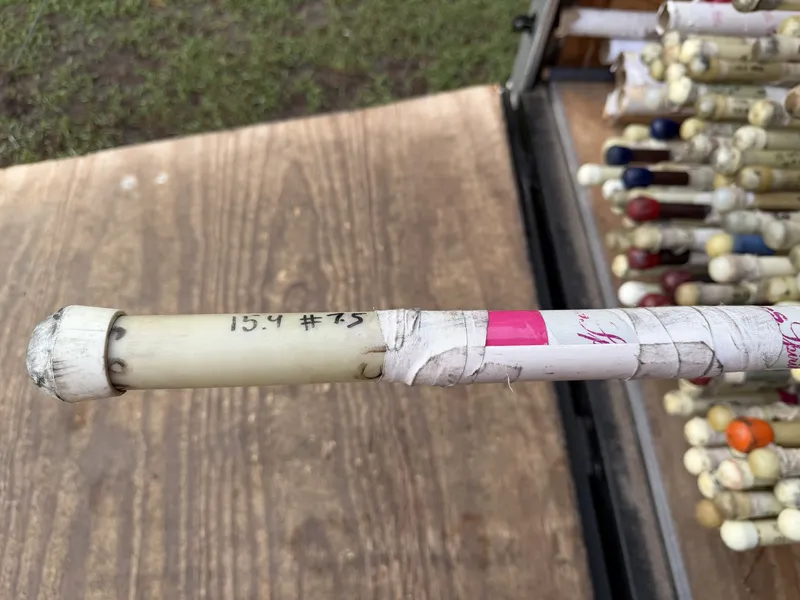
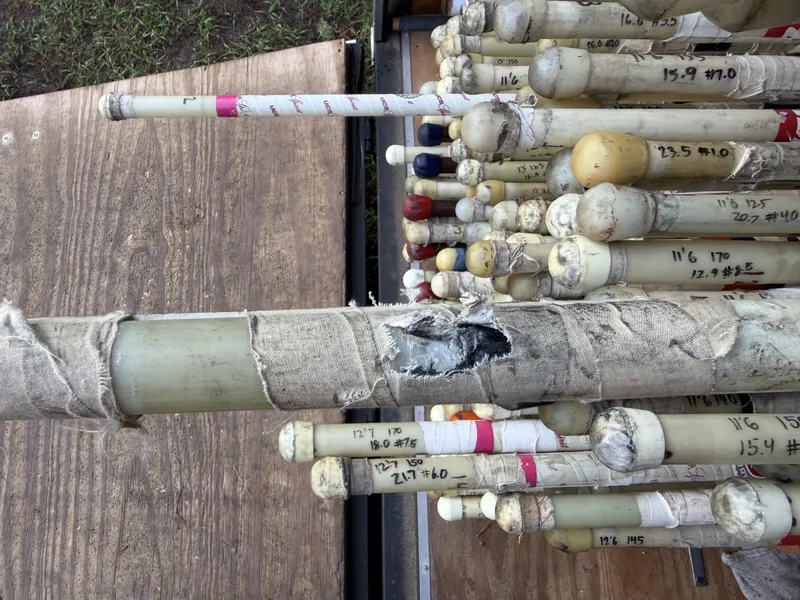
Grip tape isn’t just about your own comfort — it’s about making the pole usable and safe for every athlete on your team. Tape at least 3 feet down from the top of the pole to accommodate different grip heights and hand sizes. This prevents grip slippage for athletes who hold lower and ensures everyone has a secure hold on the pole no matter where they’re gripping.
A confident, solid grip is non-negotiable in this event. Slipping off a pole mid-vault is one of the scariest things that can happen, and it’s entirely preventable.
Sometimes you have no choice but to jump in the rain — championship meets, qualifying meets to advance to the next competition, etc. In these situations, a secure grip is your top priority.
Wet conditions amplify every other risk factor. Your approach is slippery, your plant is less secure, and a wet grip can turn a routine vault into a scary one. Stay on top of it.
Fiberglass and carbon fiber do not play well with concrete, metal, asphalt, or any other hard surface. Keep your poles away from them — during transport, storage, warm-ups, and competition.
Our study material makes this point directly: the padding of any and all hard surfaces around the perimeter of the vaulting environment is critical. The vast majority of catastrophic injuries in pole vaulting over the past 15+ years have involved unpadded hard surfaces surrounding landing pads. The same principle applies to your poles — a pole that strikes concrete, a metal standard base, or any hard surface can sustain invisible damage that weakens it from the inside.
When storing poles long-term, keep them on a rack indoors, out of direct sunlight. UV exposure degrades the resin over time. A climate-controlled space is ideal, but at minimum, keep them covered and protected from physical contact with hard surfaces.
When transporting poles, always use protective tubes or cases. Secure them so they can’t roll around or bang against each other, your vehicle, or anything metal. A roof rack with proper padding works, but loose poles sliding around in the back of a pickup truck is asking for trouble.
This one is simple and it makes a huge difference: always have someone designated to catch poles after the vaulter clears (or attempts) the bar.
When a vaulter pushes the pole back after clearing, it falls — and it falls hard. An uncaught pole slams back onto the runway, and over time (or even in one bad landing) that repeated impact creates damage.
Most pole manufacturers actually print “catch the vaulting pole” right on the pole itself. There’s an ongoing push within the sport to make pole catching a mandatory part of competition rules, and for good reason. Whether it’s required by rule or not, make it a non-negotiable part of your program’s culture.
At practice, assign a catcher. At meets, recruit a teammate, a parent, or an official. It takes zero athletic ability and it protects hundreds or thousands of dollars in equipment — not to mention the next athlete who jumps on that pole.
Vaulting poles are the most expensive, most critical, and most neglected piece of equipment in track and field. They’re engineered to handle enormous forces — but only when they’re intact. A single deep scratch, a worn-through plug, or one careless moment with poles flat on the ground can turn a routine vault into a disaster.
Build good habits. Inspect often. Store smart. Catch your poles. And never, ever lay them on the ground.
Your poles take care of you in the air. Take care of them on the ground.